
The seven books behind our method

People sometimes ask where our method comes from. The honest answer: from more than 200 client engagements, and from seven books we keep coming back to.
We didn't copy these books. We took the ideas that worked for solo coaches, consultants and fractional leaders, tested them on real clients, and left out what didn't fit. Here's what we took from each one, and where it lives in our work.
1. The Unfair Advantage, by Ash Ali and Hasan Kubba
The big idea: everyone has advantages that others can't easily copy. The authors sort them with the word MILES: Money, Intelligence and insight, Location and luck, Education and expertise, Status.
What we took: people leaving corporate almost always underestimate their own advantages. Twenty years of experience is something a younger competitor simply can't copy.
Where it shows up: it's the first thing we look at, in the Brand & Business Heart. We go deeper in Your unfair advantage after corporate.
2. The Four Steps to the Epiphany, by Steve Blank
The big idea: most new businesses fail because nobody wants what they're building, not because they build it badly. So get out of the building and talk to customers before you build anything.
What we took: customer discovery is the most skipped step in every solo practice we've seen. It's also the one that saves the most time and money.
Where it shows up: Customer Lab, and the validation phase of our method. More in Customer discovery for coaches.
3. The 1-Page Marketing Plan, by Allan Dib
The big idea: your whole marketing plan fits on one page, split into before (people who don't know you yet), during (people who are interested) and after (people who paid).
What we took: marketing doesn't stop when someone pays. Looking after clients and asking for referrals is part of the plan too.
Where it shows up: in why our system runs from positioning all the way through to follow-up, instead of stopping at content.
4. $100M Offers, by Alex Hormozi
The big idea: people buy when the value feels much bigger than the price. Value goes up when the result is big and believable, and when it comes fast and with little effort.
What we took: most coaches sell their method ("six sessions of coaching"). Buyers want the result. Changing that one thing changes how an offer sells.
Where it shows up: Product Lab. More in How to build an offer people want to pay for.
5. $100M Leads, by Alex Hormozi
The big idea: there are only a few ways to get people interested: reaching out to people who know you, reaching out to people who don't, posting useful content, and paying for ads.
What we took: solo practices should start with the free ways, and do them well, before paying for anything.
Where it shows up: Lead Generation, where content and outreach work together. More in LinkedIn outreach that doesn't feel like spam.
6. You Can't Teach a Kid to Ride a Bike at a Seminar, by David Sandler
The big idea: selling works best as an honest conversation between equals. Agree on what the call is for at the start. Understand the real problem before you suggest anything. And don't solve the client's problem for free on the first call.
What we took: most coaches give away their best thinking on a discovery call and then wonder why nobody buys.
Where it shows up: our sales conversation guidance and the Conversion Center. More in Getting clients when you hate selling.
7. Sales Is Therapy, by Jack Frimston and Zac Thompson
The big idea: good selling looks a lot like good listening. You help the other person understand their own situation, without pushing.
What we took: coaches are often already great at this part. They just don't trust that it counts as selling.
Where it shows up: in how we teach discovery calls, together with Sandler. Also in Getting clients when you hate selling.
What ties them together
Put these seven books side by side and one message comes through. Know your advantage. Find out what people need. Make an offer they can say yes to. Tell the right people about it. Talk to them honestly. Look after them once they've paid.
That's the order our method runs in. The books gave us the ideas. Our clients showed us which ones actually work for a one-person practice.
Olga Kirillova is co-founder, CEO and CRO of mettaCofounder. She spent years at adidas, rising from personal assistant to Senior Product Manager, then led a team at Wayfair. ICF-certified coach.

Carsten Pfisterer is co-founder, COO and CPO of mettaCofounder. He spent eight years in marketing at adidas and grew a B2B sales line at Wayfair from €1.5 million to €5 million. ICF-certified coach.
Keep reading

Why "find your why" isn't enough, and what to build instead
A purpose statement on the wall doesn't change what you sell or who buys it. The Brand & Business Heart does. Here's the difference.
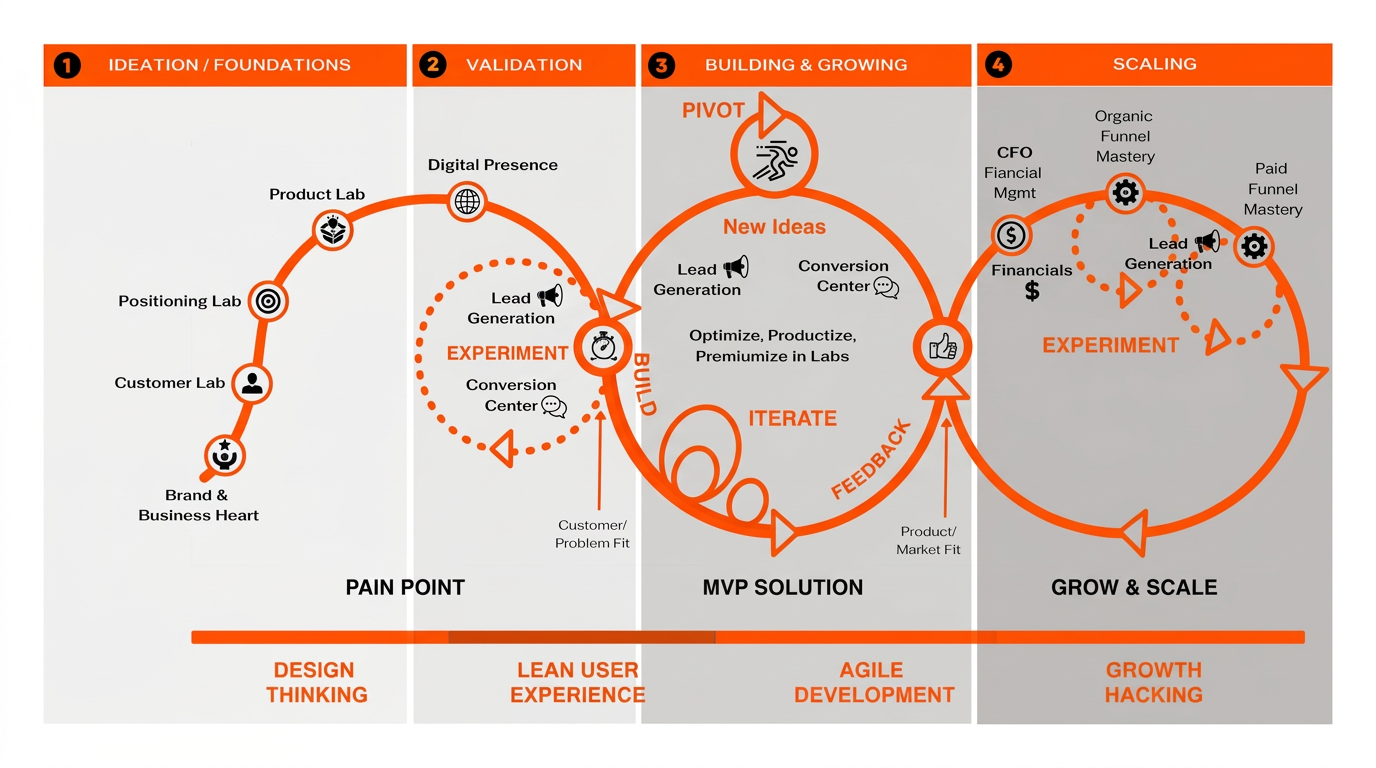
The Embedded Cofounder Method, explained in four phases
Most solo practices don't fail at one step. They skip steps. Here's the map we use, phase by phase.

Distort the feed: why sounding average costs you clients
Every feed looks the same now. Distorting it means breaking the pattern with what you stand for, so the right clients remember you and book a call.

DISTORT THE FEED. GROW THE BUSINESS.
Hire your marketing and sales team.
Free during the beta. Launch pricing starts 1 November.
Or start free with your LinkedIn analysis. Email only, no card, no time limit.